WRITTEN BRIEF ONLY
LinkScope Sourcing 12
Use this page when the adapter specification is ready to leave your desk. The inquiry dialog elsewhere is a narrow prompt. Here the review path, the illustration of that path, and the form sit in separate bands so you can see what will be forwarded.
How an adapter brief moves
- You submit the sleeve, polish, cutout, quantity, destination, and timing.
- The desk checks whether those cells are complete enough to send outward.
- Factories that receive the packet answer on that basis and mark deviations as deviations.
- You compare the replies. This site does not pick the factory.
Channels that are actually in use
- Written brief: the form on this page. That is the controlled channel.
- Reply path: the work email you type into the form. No separate mailbox is published here.
- Phone: not published. A call would skip the sleeve and polish fields the comparison needs.
- Hours: briefs are read on US business days. A timestamp on the form is not a shipment date.
- Social accounts: none are operated for quotations.
Do not treat a pin on a public map as this desk. The illustration shows a review bench for adapter drawings, not a street address.
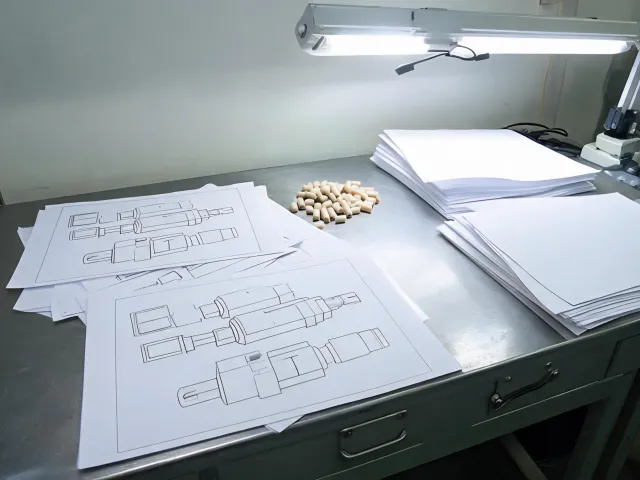
Fields that belong beside the price question
Interface type, fiber mode, connector family on each side, sleeve material, UPC or APC, flange or panel cutout, and port count. Quantity in adapters or loaded panels. Destination. Expected timing.
If the adapter sits in a live link, add wavelength, reach, optical budget, host platform, diagnostics you expect from other devices, and the temperature range of the room or case. Those notes keep the sleeve from being blamed for a module limit, and they keep a module limit from being hidden inside the sleeve price.
An optional budget needs a currency and a basis: per adapter, per panel, or the whole order. High-end, mid-range, budget, or undecided describes the kind of factory response you want to see. It is not a score this desk has verified, and you can send the brief before any factory has priced it.
Insertion loss and return loss should be requested as maximums in dB with the wavelength named. A 2.5 mm ferrule request for SC or ST is not filled by a 1.25 mm LC body. Say that limit in the requirement field if it is mandatory.
If a drawing will not fit in the form, say so in the requirement field and send the file after the first reply. The form itself has no upload control. Useful checkpoints to type when you know them: 1310 nm and 1550 nm for single-mode loss rows, or 850 nm and 1300 nm for multimode. Leave a cell blank rather than guessing a figure this site has not measured.
Single-mode SC or ST sleeves are usually zirconia and are cut for a 2.5 mm ferrule. Multimode sleeves are often phosphor bronze and can suit a short indoor run when the tray is already multimode. Neither material wins on its own. A 24-port plate still needs its own cutout, and a quad housing is not a drop-in for four simplex holes unless the drawing says so. Ask the plant for maximum insertion loss and return loss in dB, the wavelength of that row, and a connector mating cycle count with the method, whether the drawing shows 500 cycles or 1000 cycles. A 50 dB return-loss class and a 60 dB class describe different polish questions. They are not results this page recorded. A new housing and a pulled housing stay on separate lines until condition and remaining cycles are written down.